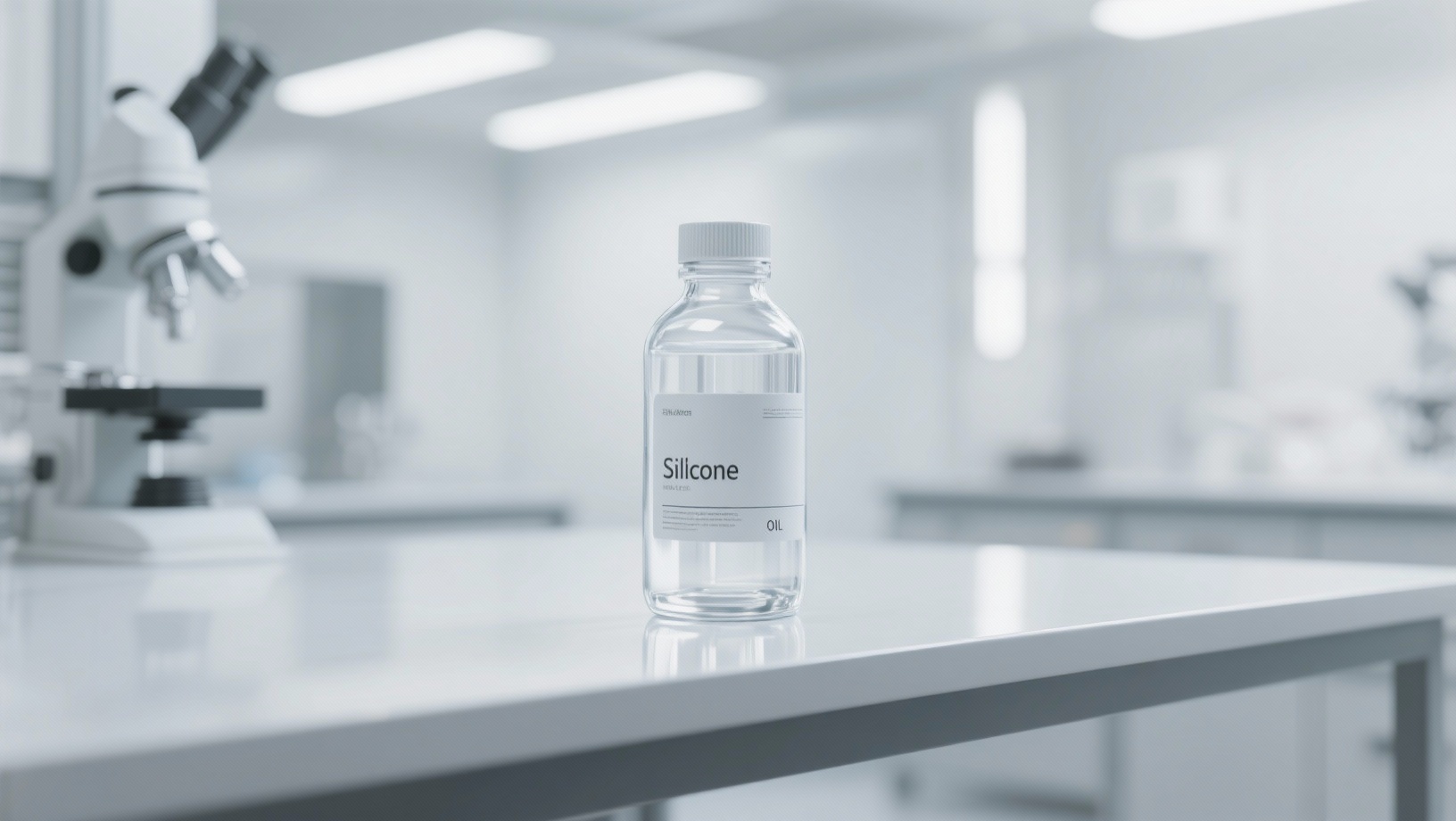
What changes on the floor when you pick the right silicone oil or silicone fluid grade — and what to check before you order.
Most quality problems on a shop floor don't start with one big mistake. They start small — a fluid that's slightly off-spec, a batch nobody questioned. Silicone oil and silicone fluid are exactly the kind of input that gets ignored until something goes wrong with it.
Plants in textiles, coatings, automotive, and personal care use these fluids constantly, often picking grades out of habit instead of checking what the process actually needs. This piece walks through what silicone fluid does, how grades differ, and what changes once you get the sourcing right.
What is the silicone fluid and Key Features
At its core, Silicone fluid is a polymer built on a silicon-oxygen chain. That structure is what sets it apart from mineral oils — it holds up across temperature swings, doesn't oxidise easily, and keeps a steady viscosity even with repeated use. None of that sounds exciting on paper, but it's exactly why plants lean on it where consistency matters more than peak performance.
A few things worth knowing about quality grades:
- Holds up in both cold storage and high-heat runs
- Low surface tension — helps with release, spreading, water repellence
- Doesn't react with most acids or bases
- Degrades slowly, so you're not topping up constantly
- Works across a wide viscosity range, thin to thick
Did you know? Silicone fluid was originally used for aerospace and military insulation, long before it ended up in everyday textile and personal care products.
Product Overview
Silicone fluids are graded by viscosity — measured in centistokes, written as cst. Lower number, thinner liquid, closer to water. Higher number, thicker, more like honey. That one number tells a buyer almost everything they need to know before placing an order.
Common Viscosity Grades and Their Use
- Low viscosity (5 to 50 cst) — light coatings, anti-foam work, quick-spreading jobs
- Mid viscosity, including silicone fluid 350 and silicone fluid 100 cst — general lubrication and release work
- High viscosity (1000 cst and up) — damping, sealing, heavier mechanical loads
Of the mid-range options, silicone fluid 100 cst tends to get picked when you need a thin, even film without it running off. Silicone fluid 350 sits a bit heavier and holds up longer under moderate load.
It's worth saying — picking a grade isn't just about matching a number on a data sheet. Two plants running the same process can still need different viscosities depending on equipment, ambient temperature, even how the line is set up. That's where talking to someone who actually knows the fluid helps more than guessing from a catalogue.
Comparison: General-Purpose vs Specialty Grades
Here's a general look at how the two grade types compare. No brand names, no specific package sizes — just the broad differences.
| Fluid Characteristic |
General-Purpose Grade |
High-Viscosity / Specialty Grade |
| Typical Appearance |
Clear, thin, free-flowing liquid |
Clear, thicker, slow-pouring liquid |
| Thermal Behaviour |
Stable across a wide temperature band |
Retains film strength at higher heat loads |
| Common Role |
Release agent, defoamer base, light lubrication |
Heavy-duty lubrication, damping, coatings |
| Handling Ease |
Easy to pump, mix, and dilute |
Needs controlled mixing due to thicker body |
| Storage Stability |
Long shelf life when sealed correctly |
Long shelf life, less prone to evaporation loss |
| Best Suited Industries |
Textiles, personal care, paper, packaging |
Automotive, electronics, industrial machinery |
Key Advantages of Choosing the Right Fluid
Here are the major advantages of selecting the right fluid:
- Batches behave the same way every time — less rework
- Right viscosity means less wear on pumps, seals, moving parts
- Fewer rejected batches, less frequent fluid replacement
- Easier audits when documentation stays consistent
- Cleaner finishes — smoother textiles, clearer coatings, better mould release
Trivia: A single drop of silicone fluid can spread thin enough to cover a surprisingly large surface, that's why dosages stay so small even in industrial use.
None of these advantages show up overnight. They tend to surface a few months in, once you compare rejection rates or maintenance logs against the period before the switch. That's usually when teams realise the fluid was quietly costing them more than the invoice ever showed.
Technical Specifications to Check Before Buying
Before you place an order, run through this short list instead of judging by how the fluid looks:
- Viscosity (cst) that actually matches your flow and film needs
- Flash point and thermal range for your process temperature
- Purity — no unwanted volatile content
- Batch consistency, backed by a certificate of analysis
- Packaging that works for both small trials and full runs
Fact: Sealed and stored away from sunlight and moisture, most industrial silicone fluids stay chemically stable for years.
Industries and Applications
Silicone fluid shows up in more places than people expect:
- Textiles — fabric finishing, softness, no staining
- Automotive — as a lubricant silicone oil on hinges, seals, rubber parts
- Personal care — texture and spreadability in creams and lotions
- Coatings — defoaming and surface levelling
- Electronics — dielectric protection and heat handling
- Construction — water-repellent treatments for sealants and masonry
In automotive work specifically, a good silicone oil lubricant won't gum up in cold weather and won't thin out too fast when things heat up — something regular lubricants struggle with.
Why Choose the Right Silicone Fluid Partner
Good fluid doesn't count for much if your sourcing isn't reliable. Working with a real silicone fluid manufacturer brings things beyond just the product itself.
What to Look for in a Supplier
- Proper paperwork — certificates of analysis, data sheets, every batch
- Packaging that flexes between lab trials and full production
- Honest guidance on viscosity, not a one-size pitch
- Delivery you can actually plan around
- Clear silicone oil price terms, nothing hidden
There's no shortage of Silicone fluid manufacturers in India, but look at how each one handles consistency. A solid silicone fluid supplier in India will hand over batch data without being asked twice and explain why one grade fits your process better than another instead of just pushing whatever's sitting in stock.
Worth comparing how different silicone fluid dealers operate too. Some just sell. Others stick around to help when something underperforms. And established silicone fluid distributors in India usually carry a wider spread of viscosity grades, which matters when an order needs to move fast.
Plus Tech Chem
Parag Rawat is the CEO of Plus Tech Chem, an experienced manufacturer and supplier of speciality fluid materials. Plus Tech Chem has many years of experience formulating speciality chemical product lines, which allows it to formulate premium speciality fluids such as silicone fluid, silicone oil, silicone emulsions and silicone defoamers which fulfil each sector of industrial needs. It is known for quality and the ability to tailor solutions to customers' needs and endeavours to assist clients with reliable chemical solution programs. It provides quality products for all their clients' long-term growth within the worldwide marketplace.
FAQs
1. What's the difference between silicone oil and silicone fluid?
Ans: Honestly, not much — the terms get used interchangeably in most industries. Both refer to the same silicon-based liquid. Some suppliers use "oil" for lubrication contexts and "fluid" for industrial processing, but chemically, they're the same product.
2. How do I know which viscosity grade I need?
Ans: It depends on your process, not a fixed rule. Thin grades suit light coatings and release work. Thicker grades handle heavier loads. Talk to your supplier — they've usually seen your exact use case before.
3. Does silicone fluid expire or go bad over time?
Ans: Not really, if stored properly. Keep it sealed, away from sunlight and moisture, and it stays stable for years. Problems usually come from contamination or poor storage, not the fluid breaking down on its own.
4. Can silicone fluid be mixed with other oils or additives?
Ans: Sometimes, but it's risky without testing first. Compatibility depends on the other chemical's composition. Always check with your supplier or run a small trial batch before mixing anything into a full production run.
5. Is silicone oil lubricant better than regular mineral oil?
Ans: For certain jobs, yes. It handles temperature swings better and doesn't gum up in cold weather. For others, mineral oil works fine and costs less. It really comes down to what your equipment demands.
6. How do I find a reliable silicone fluid supplier in India?
Ans: Check for proper documentation — batch reports, certificates of analysis, technical data sheets. A good supplier explains grade selection instead of just pushing stock. Ask questions and see how clearly they answer.
Conclusion
Quality rarely turns on one big decision. It's the small, technical calls that add up — and fluid selection is one most teams overlook. Match the viscosity to the job, check the paperwork, and pick a manufacturer or distributor you can rely on. That's really the whole formula for getting consistent results, batch after batch.