Ask a few plant engineers what keeps a line running smoothly, and additives come up fast. Element Silicone Fluid is one they mention often. It works as a lubricant. It holds up as a mold-release agent. In electrical systems, it does the job of a dielectric medium. What ties these uses together is consistency — the kind that keeps operators from double-checking every batch. This piece walks through what the fluid actually does, where it earns its keep, and a few things worth confirming before you order.
What is Element Silicone Fluid?
Chemically, it's a polydimethylsiloxane based fluid — clear, thermally stable, and largely inert around other chemicals. The Element range's headline product is Element 14 PDMS 30000 CST, built for jobs that call for a heavier film or a longer-lasting coat. It doesn't lose its footing at higher temperatures either, which is part of why Element Silicone Fluid Uses now cover far more ground than a standard oil ever could.
- Part of the PDMS family, built around a silicon-oxygen backbone
- That backbone does the heavy lifting against most forms of chemical attack
- Comes in a high-viscosity grade for tougher mechanical setups
- Clear, colourless, and low on odour
Why is it Important?
There's not much room for guesswork on a production floor. Silicone Fluid Properties are exactly what closes that gap. Oxidation resistance, steady viscosity under shear, near-total inertness around other chemicals — each one quietly removes a way things could go wrong. Formulators tend to stick with this category for a simple reason: it holds up more predictably than mineral-based alternatives do. Tracing a viscosity problem after it's already shown up on the line costs far more than getting the grade right at the outset.
Types and Variants
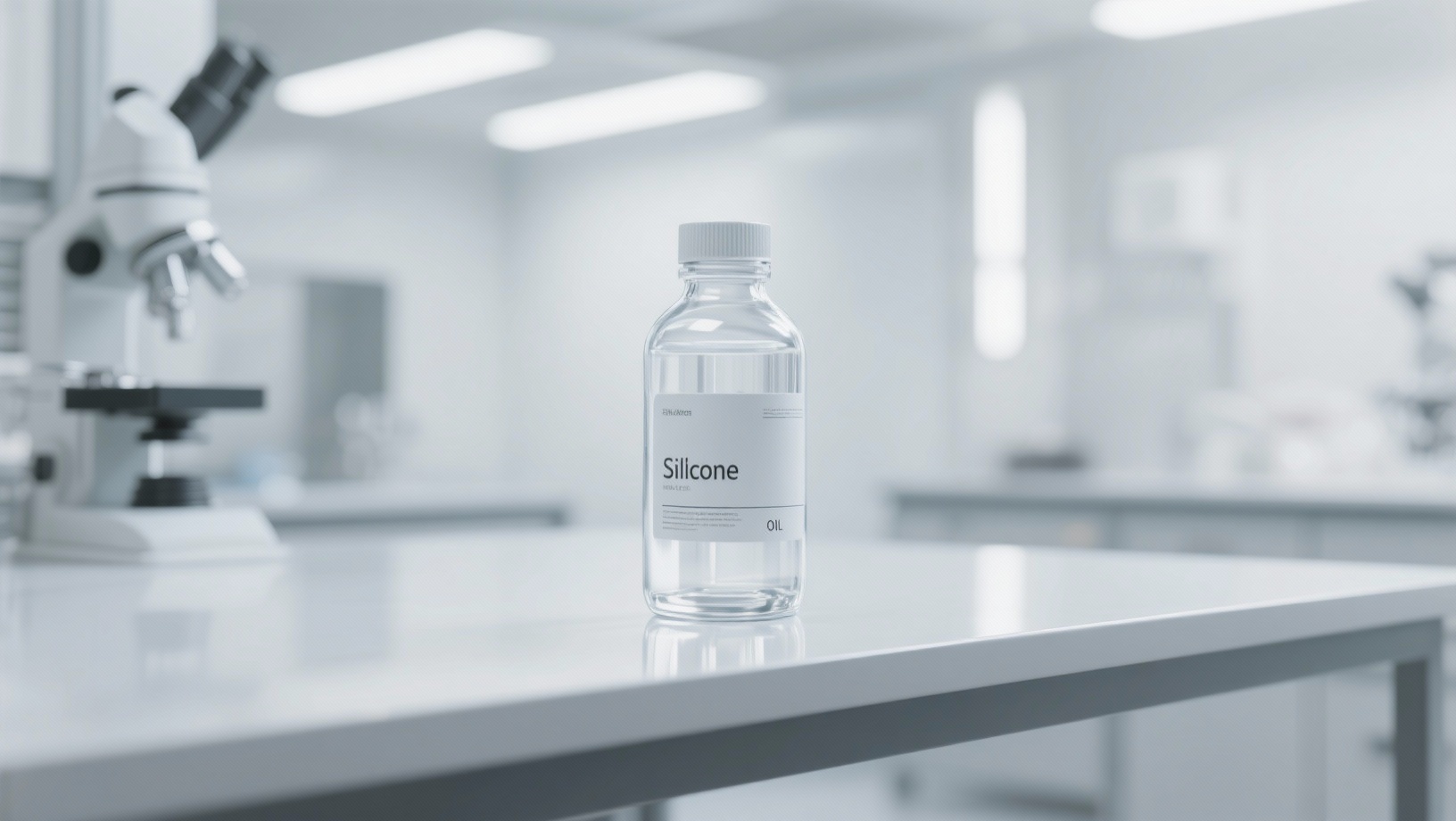
Silicone Fluid, taken as a whole, spans a wide range — from thin, almost water-like Silicone Oil at one end to thick, syrup-like grades at the other, some running into the tens of thousands of centistokes.
- Low-viscosity grades handle defoaming, coatings, and light lubrication
- Mid-viscosity sits in between — personal care, general industrial blending
- Need heavy film retention or dielectric insulation? That's where Element 14 PDMS 30000 CST and other high-viscosity grades come in
Features to Look For
Silicone chemistry isn't one-size-fits-all — grades differ, and a handful of properties are worth checking before you pick one.
- How stable is the viscosity under mechanical stress?
- Flash point and pour point — both flag the thermal range
- Surface tension affects how well it wets and spreads
- Refractive index, specific gravity: useful for confirming a batch
- Clear and low-odour usually signals a well-refined fluid
FACT
High-viscosity PDMS fluids hold up well even after repeated thermal cycling — one reason they last in systems that run continuously. |
Product Overview
Numbers tell the story here. Element 14 PDMS 30000 CST comes in around 30,000 cSt at 25°C, with a flash point past 316°C and a pour point down near −50°C. Add a refractive index between 1.4015 and 1.4055 and a specific gravity close to 0.97, and you've got two more reliable checks for batch consistency. That non-greasy, silky texture traces back to a surface tension of roughly 21.3 dynes per centimetre. None of these figures matter in isolation — but line them up against a competing brand, and the gaps in Silicone Oil Properties usually explain why one batch handles better than another.
Benefits
A fairly consistent list of Element Silicone Fluid Benefits shows up across formulations, and most of it traces back to that silicon-oxygen backbone.
- Holds up thermally at both extremes — hot and cold
- Resists oxidation and general chemical breakdown
- Low volatility means easier, safer handling
- Shear stability: viscosity barely moves under stress
- Soft and silky without turning greasy
Applications and Use Cases
Turn up the right conditions — heat, friction, moisture — and Element Silicone Fluid Applications start showing up in places you might not expect.
- Bearings, guides, mechanical assemblies — a heavy-duty Silicone Oil Lubricant for all of them
- Doubles as a heat transfer medium across wide temperature swings
- Electrical and capacitor systems use it as a dielectric or insulating fluid
- Large, slow-curing mouldings rely on it as a release agent
- Adds gloss and water repellence when blended into polishes and coatings
- Personal care formulations lean on it for a soft, non-greasy touch
Between Silicone Fluid Uses and general Silicone Oil Uses, this high-viscosity grade tends to win out wherever a thinner oil would evaporate too fast. Slow-moving or sealed systems especially — a long-lasting film beats fast spreadability there every time.
TRIVIA
Silicone chemistry dates back to the 1930s — long before its industrial and personal-care applications became this widespread. |
Comparison Table
A quick side-by-side of common viscosity bands, meant as a general reference rather than a spec sheet:
| Viscosity Band |
What It Feels Like |
Common Role |
Handling Note |
| Low viscosity |
Runs thin, flows freely |
Defoaming, light coatings, surface treatments |
Evaporates fast, spreads even faster |
| Medium viscosity |
Some body, still smooth |
General blending, textile finishing, cosmetics |
Flow and film stay fairly balanced |
| High viscosity |
Thick, almost syrup-like |
Heavy lubrication, mold release, dielectric use |
Film holds up well under load |
| Ultra-high viscosity |
Very thick, close to gel |
Long-term sealing, specialised insulation |
Needs careful metering on application |
Expert Tips and Buying Guide
Sourcing matters just as much as the chemistry itself. Go with an established name among Silicone Oil Suppliers in India, and you get documented specs, tested batches, and grades that actually fit your process — which cuts down the trial-and-error considerably. It also means someone on the other end can answer a technical question without passing you along three times first.
- Match viscosity to the actual load, not just what the application is called
- Get batch-level documentation before scaling up
- Keep containers sealed, away from moisture and strong oxidisers
- Start with a small trial quantity before committing to bulk
- Flash point and pour point should match your operating range — worth a final check
DID YOU KNOW
Pour point is the lowest temperature a fluid still flows at — worth checking twice if cold storage or long transit is part of the picture. |
About Plus Tech Chem
Parag Rawat is the CEO of Plus Tech Chem, an experienced manufacturer and Supplier of speciality fluid materials. The Plus Tech Chem has many years of experience formulating specialty chemical product lines, which allows Plus Tech Chem to formulate a premium specialty fluids such as silicone fluid, silicone oil, silicone emulsions and silicone defoamers which fulfill each sector of industry needs. Plus Tech Chem is known for quality and the ability to tailor solutions to customers' needs and Plus Tech Chem endeavours to assist clients with reliable chemical solution programs. Plus Tech Chem provides quality products for all their clients' long-term growth within the worldwide marketplace.
FAQs
Q1: What makes Element 14 PDMS 30000 CST different from a standard silicone oil?
Ans: Mostly it comes down to thickness. This grade climbs much higher on the viscosity scale, so the film it leaves behind stays put under stress instead of thinning out. A lighter oil spreads and evaporates faster — fine for quick coatings, but it won't hold up the way this one does in bearings or mold-release work.
Q2: Can this fluid handle both very hot and very cold conditions?
Ans: It can, and that's actually where it shines. Flash point sits above 316°C on one end, pour point drops near −50°C on the other — a genuinely wide working range. Machinery left outdoors or fluid sitting through seasonal storage swings tends to benefit most from that kind of thermal headroom.
Q3: Is Element Silicone Fluid safe to use in personal care formulations?
Ans: It's a common choice there, actually. The fluid is clear, low in odour, and leaves a soft, non-greasy finish, which is exactly what personal care formulators look for. That said, grade selection still matters — always check documentation and confirm suitability for your specific product before formulating at scale.
Q4: How should this fluid be stored?
Ans: Somewhere cool, dry, and sealed tight — that's the short version. Moisture, heat, and strong oxidisers won't ruin a batch overnight, but let exposure build up over months and viscosity or clarity can start to drift. It's a small habit, honestly, that ends up protecting a fairly costly material.
Q5: Does this grade work well as a mold-release agent?
Ans: Yes, particularly for large or slow-curing mouldings. High viscosity is the reason — a lighter fluid would thin out partway through a long cure, but this one keeps an even coat the whole way. A thin layer on a clean surface is all it takes; the release is clean, and nothing carries over into the next run.
Q6: Where does this fluid fit in electrical or dielectric applications?
Ans: Its inertness and stability make it a solid dielectric or insulating fluid, particularly in capacitor systems. Thermal cycling doesn't degrade it easily, so it keeps performing across systems that run for extended periods. One practical note: fill carefully. Trapped air and loose seals are usually what cause problems, not the fluid itself.
Conclusion
Between Element 14 PDMS 30000 CST and the wider Element Silicone Fluid for Industrial Applications range, what stands out is the combination — thermal stability, chemical resistance, and a handling profile that suits both heavy industrial work and finer formulations. Matching these properties to your process, rather than assuming one grade fits everything, is usually what keeps a lubrication system, a mold-release line, or a dielectric setup running without surprises.